


 西班牙语
西班牙语Industry News
Home / News / Industry News / What Makes PU Medical Accessories the Fastest-Growing Segment in Healthcare Manufacturing?
Content
Based on tracking the global medical device supply chain and the evolution path of material technologies, polyurethane (PU) medical accessories have surpassed traditional rubber and PVC products to become one of the fastest-growing consumable categories on hospital procurement lists. Their core value lies not only in the biocompatibility and disinfectability of the material itself, but also in the pressure-dispersing solutions PU foam technology brings to long-term bedridden patients, and the customized positional support capabilities it provides for surgical scenarios. From delivery rooms to ICUs, from outpatient examinations to postoperative rehabilitation, the intervention of PU materials is redefining the functional boundaries of "medical accessories."
The reason PU medical accessories can establish a foothold in demanding medical environments stems from their multiple advantages at the materials science level. Compared to latex products, PU materials contain no allergenic proteins, fundamentally avoiding allergy risks for both medical staff and patients; compared to PVC, PU maintains structural integrity after repeated high-temperature steam sterilization, significantly extending service life.
| Performance Dimension | PU Material | Natural Latex | PVC |
|---|---|---|---|
| Biocompatibility | Excellent | Moderate (contains allergens) | Average |
| Steam Sterilization Cycles | Over 500 cycles | Prone to aging and deformation | Approximately 100 cycles |
| Skin Affinity | Skin-friendly, non-irritating | May trigger contact dermatitis | Relatively hard, low comfort |
| Cleaning & Maintenance Difficulty | Seamless surface, wipe-clean | Porous structure, traps dirt | Smooth surface but prone to cracking |
The data above demonstrates that PU materials hold clear advantages in both durability and safety dimensions. For high-frequency-use accessories such as obstetric surgical bed leg frames and ICU mattresses that require daily cleaning and disinfection, this performance gap directly translates into operational cost differences for hospitals and improvements in patient safety coefficients.
PU medical accessories are not a single category, but rather a solution matrix covering multiple clinical scenarios. The following two product types are the most representative, and their technological evolution directions also reflect the development trends of the entire niche segment.
During childbirth and gynecological surgery, the positioning of the patient's lower limbs directly impacts the surgical field of view and maternal comfort. Traditional metal leg frames paired with hard pads often cause common peroneal nerve damage or skin pressure redness due to prolonged compression. PU material gynecological surgical bed leg frames address this pain point through the following design improvements:
Pressure injuries (pressure ulcers) are among the most common complications for long-term bedridden patients, with high treatment costs and severe impacts on patient quality of life. Medical foam mattresses made of PU material shift the prevention window forward through materials engineering:
The special nature of medical accessories lies in the fact that quality defects may directly endanger patient lives. Therefore, PU medical accessory manufacturers must establish closed-loop management systems across three stages: raw material screening, production process monitoring, and finished product inspection.
Medical-grade PU raw materials must comply with ISO 10993 biocompatibility testing requirements, including three core indicators: cytotoxicity, skin sensitization, and intradermal reaction. Leading manufacturers have established full-chain batch traceability systems from polyol and isocyanate suppliers to finished product dispatch, enabling any finished product to be traced to a specific raw material batch and production team within 15 minutes.
The PU foaming process is extremely sensitive to temperature and humidity; fluctuations exceeding ±2°C may lead to uneven cell structures, affecting the rebound rate and load distribution of finished products. High-standard production workshops typically feature:
The expansion of the global PU medical accessories market is not accidental, but driven by three converging forces: demographic shifts, upgrades in medical standards, and regionalized supply chain restructuring.
UN data indicates that by 2030, the global population aged 60 and above will exceed 1.4 billion, accounting for 16.5% of the total population. The hospitalization rate for elderly populations is approximately 3.2 times that of the general population, with longer average hospital stays, directly driving up consumption of PU accessories such as anti-pressure ulcer mattresses, positioning pads, and nursing pads. Taking long-term care facilities as an example alone, the annual replacement frequency of PU mattresses and accessories per bed has increased from 1.2 times five years ago to 1.8 times today.
In the post-pandemic era, medical institutions have significantly raised material requirements for repeatedly disinfectable accessories. Both the US CDC and European EN standards have strengthened cleaning verification procedures for surgical bed attachments, with traditional fabric or leather-wrapped accessories gradually exiting operating rooms due to difficulty in thorough disinfection. PU materials, with their dual characteristics of resistance to 121°C high-temperature steam sterilization and gamma-ray irradiation sterilization, have become the preferred replacement.
Southeast Asia, the Middle East, and Latin America are experiencing concentrated medical infrastructure construction. Taking Vietnam as an example, its 2023-2028 medical facility upgrade plan involves constructing and renovating over 1,200 secondary-level and above hospitals, with the initial PU medical accessory procurement per hospital averaging 1.4 times that of traditional hospitals, because new projects tend to adopt modern consumables meeting international standards from the outset.
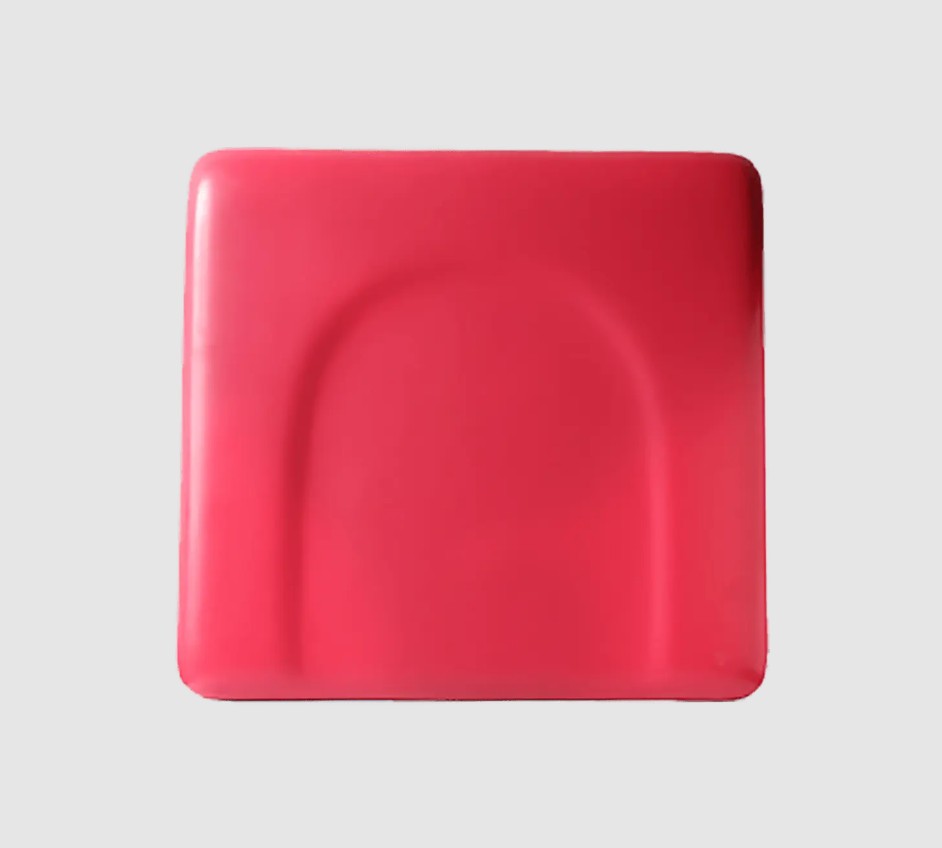
The next competitive high ground for PU medical accessories will no longer be simple material performance competition, but deep integration with sensing technology and digital modeling.
By implanting flexible pressure sensor arrays within PU foam layers, mattresses can monitor patient pressure distribution in real time and generate heat maps. When pressure in a specific area continuously exceeds safety thresholds, the system automatically sends alerts to the nursing station. Clinical trials show that such smart mattresses can reduce hospital-acquired pressure ulcer incidence from 8.3% to 2.1%, while reducing nursing staff patrol frequency by approximately 30%.
For special patient groups such as those with scoliosis or post-burn scar contractures, traditional standardized PU accessories often fail to provide effective support. PU powder sintering molding technology based on patient CT or 3D scan data can produce personalized positioning pads with surface curvature errors below 0.5mm within 48 hours, significantly improving postoperative positional maintenance accuracy.
For hospital equipment departments and procurement divisions, PU medical accessory selection should not focus solely on initial procurement costs, but rather establish a Life Cycle Cost (LCC) evaluation model.
| Evaluation Dimension | Suggested Weight | Core Indicators |
|---|---|---|
| Durability | 25% | Sterilization cycle count, rebound retention rate |
| Safety | 30% | Biocompatibility grade, flame retardancy |
| Maintenance Cost | 20% | Cleaning time, repair response cycle |
| Compliance Certification | 15% | ISO 13485, CE, FDA coverage scope |
| Supplier Service | 10% | Customization capability, spare parts inventory depth |
Using the above framework for evaluation, it is typically found that high-end PU accessories have a total cost of ownership over a five-year cycle that is 15%-22% lower than low-cost alternatives, due to their longer replacement cycles and lower failure repair rates.
The industry narrative for PU medical accessories is undergoing profound transformation. They are no longer mere appendages to surgical beds or hospital beds, but medical value carriers that directly participate in patient safety, nursing efficiency, and hospital operating costs. For manufacturers, the competitive focus has shifted from production capacity scale to material R&D depth and precision in clinical demand insight; for purchasers, establishing an accessory evaluation system based on evidence-based data will be a critical step in optimizing medical expenditure structures. In this niche segment, technology leaders and those with the fastest clinical demand response speeds will jointly define the market landscape for the next decade.

NO.81 Chenxiaqiao Road, Ziling Village, Henghe Town, Cixi City, Zhejiang, China

Tel: +86 134-84224716

E-mail: [email protected]
Copyright © 2024 Ningbo Mianyang New Materials Co.,Ltd. All Rights Reserved. Custom Polyurethane Foam Molding Products Manufacturers privacy